

Preserving the world's comics
Before they disappear. We find old comics from every country, scan them, and keep them free for anyone to read.
[Who we are]
World Comics Heritage is building a permanent home for the comic art, creators and stories of every country.
Comics are the most read and the least preserved part of a country's story.

[The problem]
Comics were printed on cheap paper, sold for a few rupees and thrown away once read. Publishers close, and their stock goes to the scrap dealer.
[Our answer]
We scan each comic to archival standard, give every creator a lifelong record, and keep it all free to read, in every country.
Every country
Every country has its own word for comics.
Each picture opens that country's archive: its history, its artists and its comics.
See every country
What we preserve
We keep more than the pages.
We also record who drew each comic, and what it meant to the people who grew up with it.


A comic without its creator is a picture. A creator without the comic is a name.
The comic
Old issues, rare runs and original pages, scanned with care.


The artists
Hergé, Narayan Debnath, Machiko Hasegawa, Quino and thousands more, each with a lifelong WCH ID.
Browse all artists
The story
Readers tell us, on camera, what a comic meant to them.
What we do
One archive for every country, open to everyone.
Run by ISAC Foundation as a non-profit, with universities as academic and legal partners.

Archive record, example
Hokusai Manga
- By
- Katsushika Hokusai
- From
- Japan, 1814 to 1878
- Scan
- Every page, archival standard
- Rights
- Public domain

WCH ID card, example
Osamu Tezuka
手塚 治虫
- Role
- Mangaka
- Life
- Japan, 1928 to 1989
- Credited
- 76 works in the archive


Search in any script
चाचा चौधरी
Chacha Chaudhary
Comic · India · 1971
Pran Kumar Sharma
Artist · India · 1938 to 2014

Patrons
Help us preserve the archive for the next generation.
A USD 100 million endowment pays for the work, so the comics we preserve today are still here for the children who will read them tomorrow. The first USD 10 million opens the India archive and museum.
Become a PatronOur goal
- 1M
- pages scanned
- 10,000
- creators recorded
- 1,000
- filmed interviews
Friend
Any amount
One page, one creator, one story
Guardian
USD 100K to 1M
A rare collection or 100 creator records
Heritage Patron
USD 1M to 10M
A publisher archive rescue or an oral history programme
Founding Patron
USD 10M and above
A whole country's archive and museum, in your name
On tour
Come and see the collection.
We take original pages and rare comics to comic cons, book fairs and festivals. Meet the collection there, stand in front of the original page and watch artists draw.
School visits, talks and the WCH Store help keep the archive going.

Publisher Exchange
Great characters deserve new readers.
Lucky Luke sells millions in Europe and is barely known in India. Nagraj has fifty million Indian readers and no presence in Europe.


1
A publisher brings its catalogue into the archive and our exhibitions.
2
We introduce the work to readers, translators and publishers where it is unknown.
3
Two publishers swap heroes in new editions, and keep their rights and revenue.
Get involved
Every comic in the archive was looked after by a comic book lover first. Join them, and together we can preserve the rest.
Become a patron
Fund a country's archive, a collection or a programme. Your name stays on what you help preserve.
See the patron tiers
Donate a collection
Rare comics, original art or a publisher's archive. We conserve, scan and credit every piece.
Tell us what you haveRegister as a creator
Writers, artists, inkers, colourists and letterers get a lifelong WCH ID.
Get your WCH IDPartner as a university or museum
Host a collection, run research or bring an exhibition to your city.
Write to us

Got old comics at home?
Preserve the comics
The next hundred years of comics depend on what we preserve in the next ten.
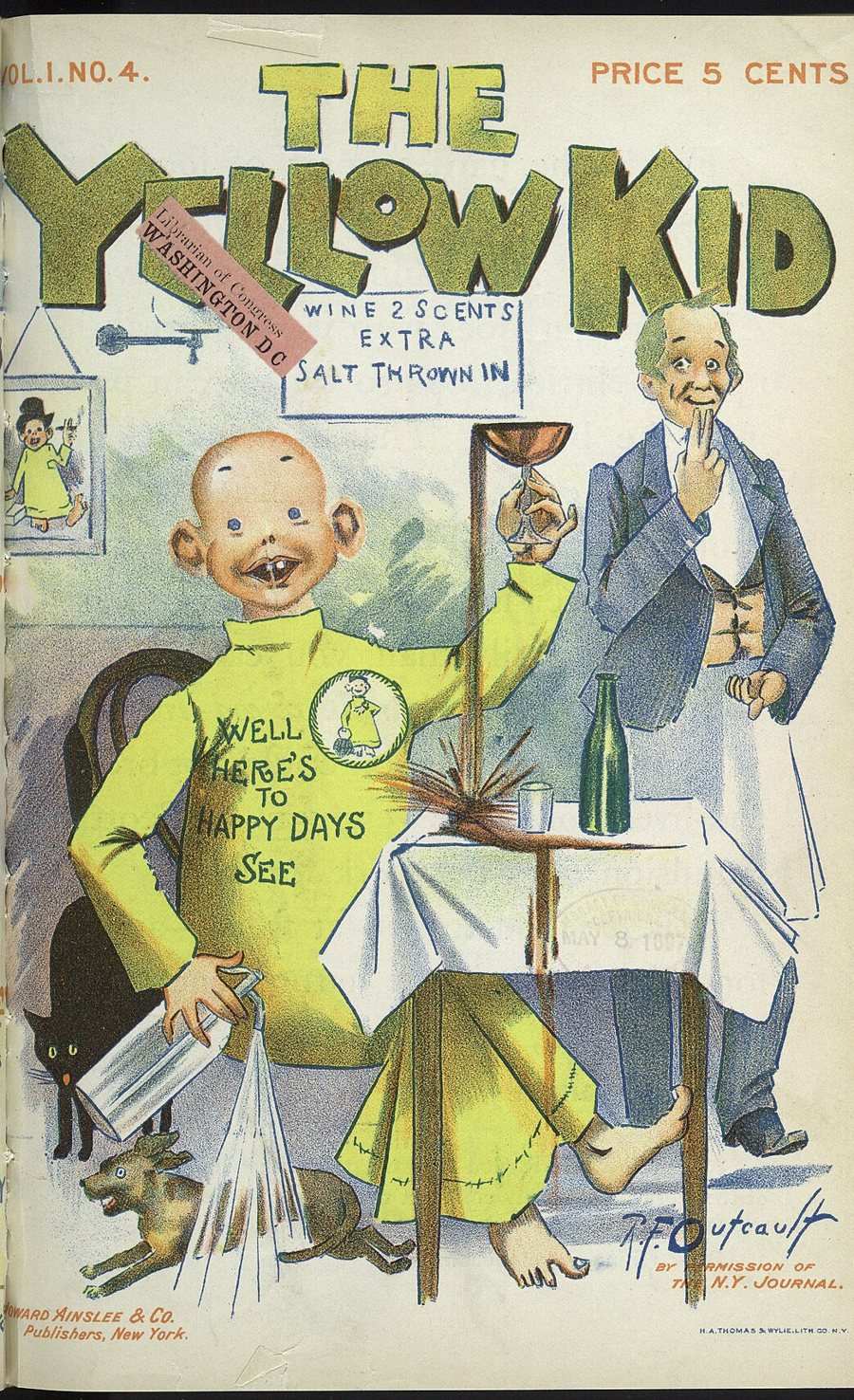
Pictures: Little Nemo in Slumberland by Winsor McCay, 1905, public domain. Chōjū-giga, 12th century, public domain. Pabuji ki Phad scrolls, photos by Nomu420, CC BY-SA 3.0, and by Marc Chang Sing Pang, CC BY-SA 2.0. Hokusai Manga, public domain. Histoire de Mr Crépin by Rodolphe Töpffer, public domain. The Yellow Kid, 1897, public domain. Narayan Debnath, photo by Kushal Das, CC BY-SA 4.0. Hergé, Linus 1965, public domain. Machiko Hasegawa, Sankei Shimbun, public domain. Quino, photo by ActuaLitté, CC BY-SA 2.0. Matsukawa Village Library, photo by Asturio Cantabrio, CC BY-SA 4.0. Osamu Tezuka, 1951, public domain. Comic room of the National Central Library, Taiwan, photo by Solomon203, CC BY-SA 4.0. Kyoto International Manga Museum, photos by Kento Ikeda, Banzai Hiroaki and Tatyana Temirbulatova, CC BY 2.0. All via Wikimedia Commons.